INDUSTRY PERSPECTIVES
A Better Machine Should Not Take Your Knowledge With It
By Jingxiao Lu·
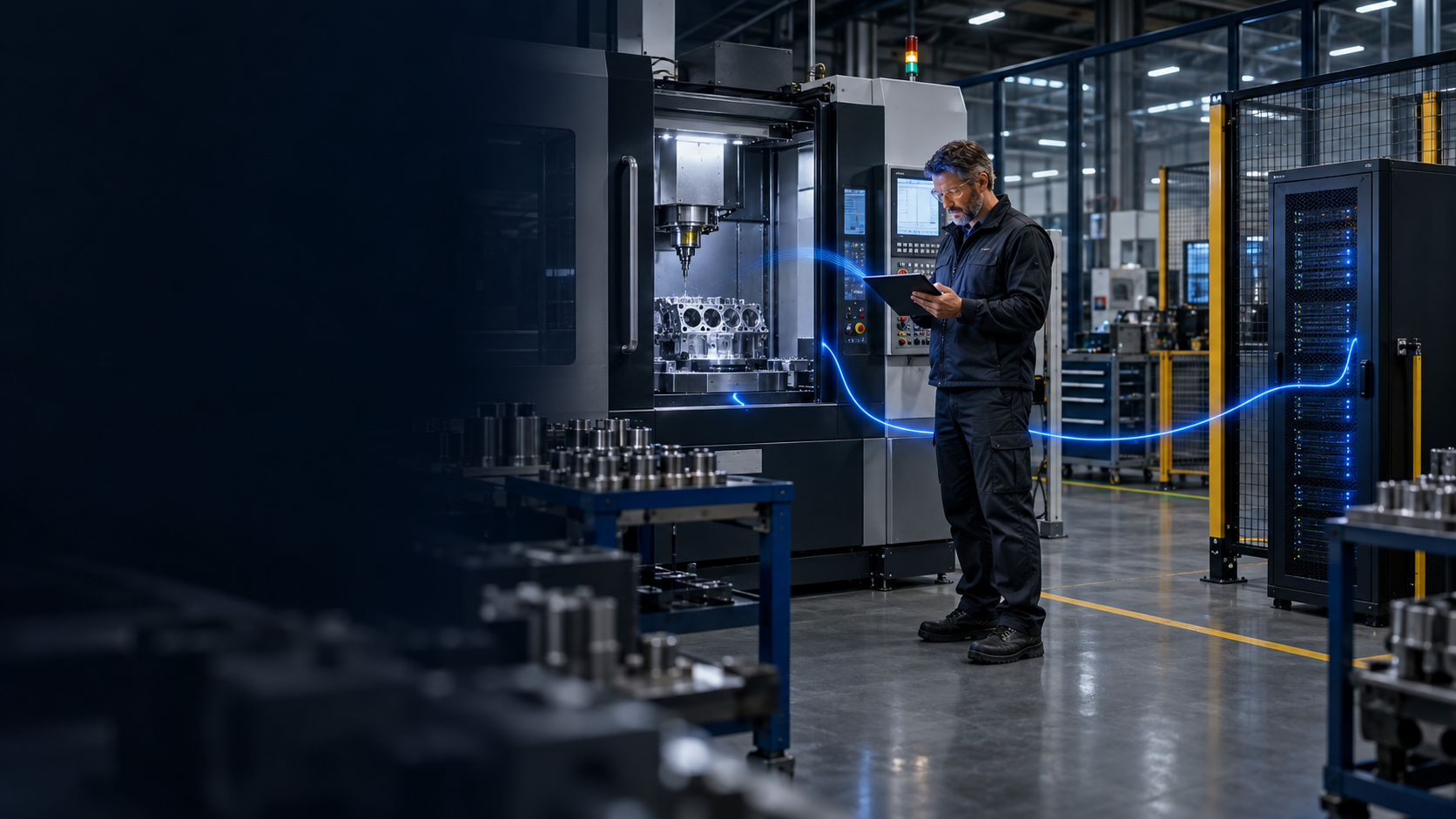
When I visited a machining factory earlier this year, I saw the team preparing to replace one of its machines with newer equipment that could hold tighter tolerances. What struck me was how much of the factory’s knowledge remained useful. The team still understood the part, the process, the customer’s requirements, and the inspections needed.
That visit stayed with me because it is how I think of private AI.
I see an AI model as another piece of equipment. It brings the ability to follow instructions and perform a task, and newer models will become more capable over time. However the model does not own the knowledge that makes the work valuable. Customer drawings, process standards, previous PFMEAs, control plans, approval rules, and lessons learned all remain with the manufacturer.
At FASTOS, our job is to connect the model to that knowledge for a specific purpose, such as preparing a Production Part Approval Process package, while keeping the knowledge under the manufacturer’s control.
Running a job locally
When I watch a quality engineer prepare a Production Part Approval Process package, or PPAP, what stands out is how much knowledge the job requires. The engineer reviews the drawing, checks the customer’s requirements, and looks for useful lessons from similar programs. This is not simply a matter of filling in a form.
A local AI system helps bring that information together. It first checks what the engineer is allowed to access, then retrieves relevant information from approved company documents. The model uses those references to help draft the PPAP, and the engineer reviews the result before it moves forward.
When the complete workflow runs locally, the request, reference documents, processing, and generated PPAP all remain inside the company’s environment. Nothing needs to be sent to a public AI service.
This is why I focus on the complete workflow, not simply where the model is installed. A model running on a local server does not protect company information if another part of the application sends prompts, documents, logs, or diagnostics outside the company. At FASTOS, we design the full information path to remain in the customer’s environment.
How AI learns the business
When I speak with manufacturing leaders about AI, one concern comes up quickly: if the system uses our drawings and process documents, does the model absorb that information?
My answer is that this is not how our system works. Adding a document does not retrain the model. The document remains in the company’s controlled repository. When an engineer starts a new project, the system finds relevant information from approved documents and gives it to the model as a reference for that specific job.
I think of it as an engineer reviewing a similar project before beginning new work. The engineer brings useful experience to the task, but still refers to the drawing, customer requirements, and previous documentation in front of them.
Keeping the model and company knowledge separate gives the manufacturer control. The company can revise a procedure, retire an obsolete document, or add an approved lesson without rebuilding the model. The original document permissions still apply, so asking the AI does not become a back door to restricted information.
The distinction is simple: the model provides the capability, while the company provides and controls the knowledge.
The company decides what becomes knowledge
Retrieving approved knowledge is one part of the system. Recording new knowledge is another, and I do not believe AI should make that decision on its own.
While helping with a PPAP, the AI may surface a new failure mode or suggest a new control method that could be useful. But a useful suggestion is not automatically a company standard.
An engineer or quality leader reviews it, decides whether it is correct, and determines where it should apply. Only after that approval does the lesson enter the company’s knowledge repository and become available to future projects.
Manufacturers already follow this discipline when they update a work instruction after a process improvement. AI can make useful knowledge easier to capture and reuse, but people remain responsible for deciding what the business accepts as true.
Replacing the model without replacing the knowledge
At FASTOS, part of my work is deciding whether a newer model is actually better for PPAP work. Newer does not automatically mean better. We evaluate promising open-source models and fine-tune it with curated PPAP datasets from private source and customer feedback without accessing a customer’s local data. When a model performs the work better, we prepare it for release through a software update.
This takes me back to the machine replacement I saw at the factory. Installing the new equipment did not mean discarding the process knowledge around it. The team still needed to integrate the machine, adjust some operating procedures, and validate the output before putting it into production.
The same principle applies to AI. The model update enters the customer’s environment, while the customer’s drawings, procedures, permissions, templates, and lessons learned remain in place. After the new model passes validation, it connects to the same controlled knowledge system.
The machine improves. The manufacturer’s knowledge stays with the manufacturer.
What manufacturers should expect from private AI
Local deployment addresses one important risk: sending sensitive manufacturing information to an outside AI service. But to me, privacy is not simply about where a model is installed. It is about whether the manufacturer remains in control as the system is used, learns from approved information, and improves over time.
That is the principle I want FASTOS to bring to manufacturing. Models are replaceable tools. The customer’s knowledge is a long-term asset, and it remains under the customer’s control as it grows and becomes easier to use with AI.
The factory I visited could invest in a better machine without giving up everything it had learned about making the part. I believe manufacturers should expect the same from AI.
If you are interested in manufacturing AI or knowing more about Fastos AI, don’t hesitate to reach out to me.